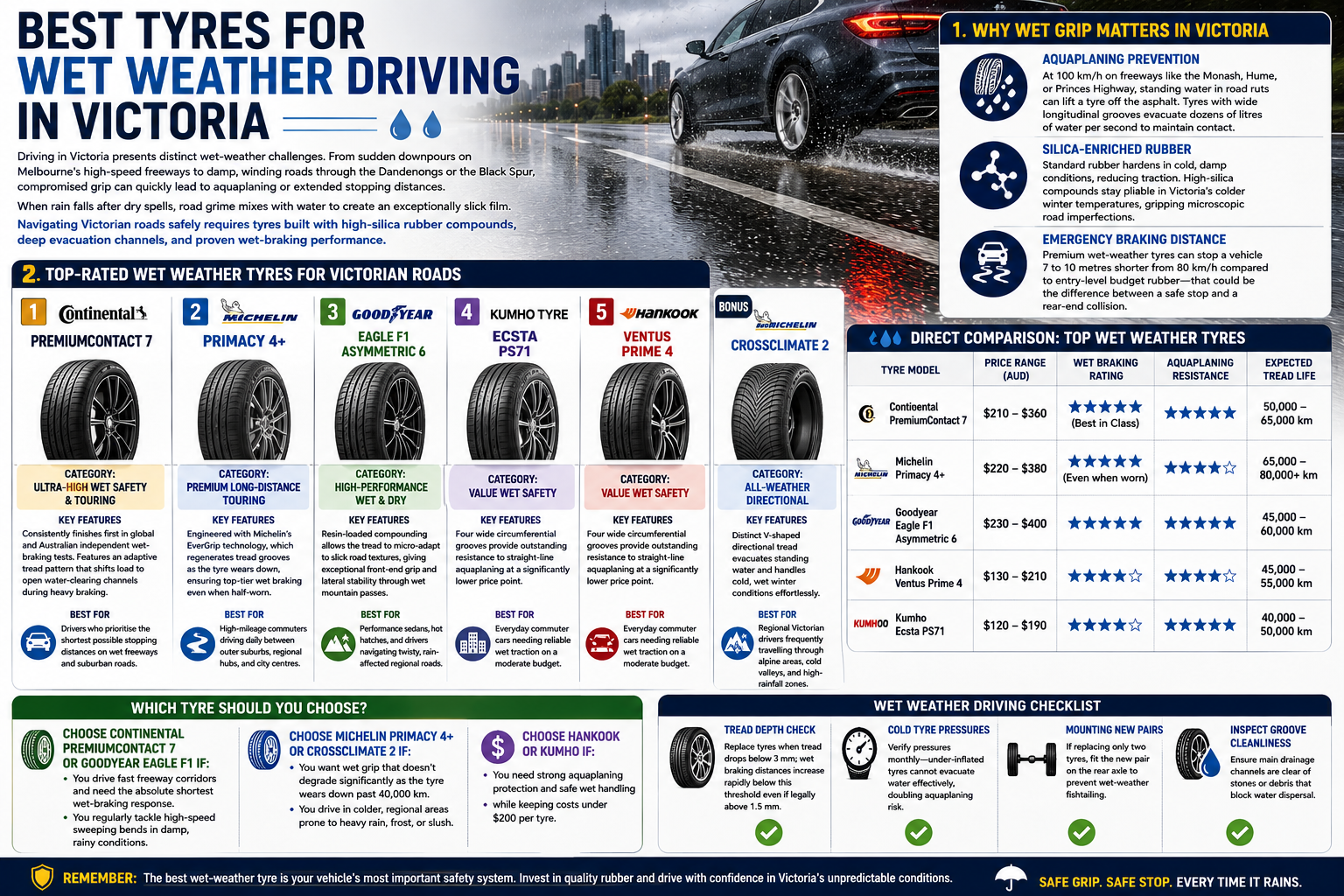
Driving in Victoria presents distinct wet-weather challenges. From sudden downpours on Melbourne's high-speed freeways to damp, winding roads through the Dandenongs or the Black Spur, compromised grip can quickly lead to aquaplaning or extended stopping distances.
When rain falls after dry spells, road grime mixes with water to create an exceptionally slick film. Navigating Victorian roads safely requires tyres built with high-silica rubber compounds, deep evacuation channels, and proven wet-braking performance.
1. Why Wet Grip Matters in Victoria
- Aquaplaning Prevention: At 100 km/h on freeways like the Monash, Hume, or Princes Highway, standing water in road ruts can lift a tyre off the asphalt. Tyres with wide longitudinal grooves evacuate dozens of litres of water per second to maintain a direct contact patch.
- Silica-Enriched Rubber: Standard rubber hardens in cold, damp conditions, reducing traction. High-silica compounds stay pliable in Victoria’s colder winter temperatures, gripping microscopic road imperfections.
- Emergency Braking Distance: Premium wet-weather tyres can stop a vehicle 7 to 10 metres shorter from 80 km/h compared to entry-level budget rubber—the difference between a safe stop and a rear-end collision.
2. Top-Rated Wet Weather Tyres for Victorian Roads
Best Wet-Braking Benchmark: Continental PremiumContact 7
- Category: Ultra-High Wet Safety & Touring
- Key Features: Consistently finishes first in global and Australian independent wet-braking tests. Features an adaptive tread pattern that shifts load to open water-clearing channels during heavy braking.
- Best For: Drivers who prioritise the shortest possible stopping distances on wet freeways and suburban roads.
Best All-Round Wet Touring: Michelin Primacy 4+
- Category: Premium Long-Distance Touring
- Key Features: Engineered with Michelin's EverGrip technology, which regenerates tread grooves as the tyre wears down, ensuring top-tier wet braking even when half-worn.
- Best For: High-mileage commuters driving daily between outer suburbs, regional hubs, and city centres.
Best Wet Performance & Handling: Goodyear Eagle F1 Asymmetric 6
- Category: High-Performance Wet & Dry
- Key Features: Resin-loaded compounding allows the tread to micro-adapt to slick road textures, giving exceptional front-end grip and lateral stability through wet mountain passes.
- Best For: Performance sedans, hot hatches, and drivers navigating twisty, rain-affected regional roads.
Best Mid-Tier Wet Performer: Kumho Ecsta PS71 / Hankook Ventus Prime 4
- Category: Value Wet Safety
- Key Features: Four wide circumferential grooves provide outstanding resistance to straight-line aquaplaning at a significantly lower price point.
- Best For: Everyday commuter cars needing reliable wet traction on a moderate budget.
Best All-Weather / Cold-Wet Performer: Michelin CrossClimate 2
- Category: All-Weather Directional
- Key Features: Distinct V-shaped directional tread evacuates standing water and handles cold, wet winter conditions effortlessly.
- Best For: Regional Victorian drivers frequently travelling through alpine areas, cold valleys, and high-rainfall zones.
Direct Comparison: Top Wet Weather Tyres
| Tyre Model | Price Range (AUD) | Wet Braking Rating | Aquaplaning Resistance | Expected Tread Life |
|---|---|---|---|---|
| Continental PremiumContact 7 | $210 – $360 | ★★★★★ (Best in Class) | ★★★★★ | 50,000 – 65,000 km |
| Michelin Primacy 4+ | $220 – $380 | ★★★★★ (Even when worn) | ★★★★☆ | 65,000 – 80,000+ km |
| Goodyear Eagle F1 Asym. 6 | $230 – $400 | ★★★★★ | ★★★★★ | 45,000 – 60,000 km |
| Hankook Ventus Prime 4 | $130 – $210 | ★★★★☆ | ★★★★☆ | 45,000 – 55,000 km |
| Kumho Ecsta PS71 | $120 – $190 | ★★★★☆ | ★★★★★ | 40,000 – 50,000 km |
Which Tyre Should You Choose?
Choose Continental PremiumContact 7 or Goodyear Eagle F1 if:
- You drive fast freeway corridors and need the absolute shortest wet-braking response.
- You regularly tackle high-speed sweeping bends in damp, rainy conditions.
Choose Michelin Primacy 4+ or CrossClimate 2 if:
- You want wet grip that doesn’t degrade significantly as the tyre wears down past 40,000 km.
- You drive in colder, regional areas prone to heavy rain, frost, or slush.
Choose Hankook or Kumho if:
- You need strong aquaplaning protection and safe wet handling while keeping costs under $200 per tyre.
Wet Weather Driving Checklist
- Tread Depth Check: Replace tyres when tread drops below 3 mm; wet braking distances increase rapidly below this threshold even if legally above 1.5 mm.
- Cold Tyre Pressures: Verify pressures monthly—under-inflated tyres cannot evacuate water effectively, doubling aquaplaning risk.
- Mounting New Pairs: If replacing only two tyres, fit the new pair on the rear axle to prevent wet-weather fishtailing.
- Inspect Groove Cleanliness: Ensure main drainage channels are clear of stones or debris that block water dispersal.