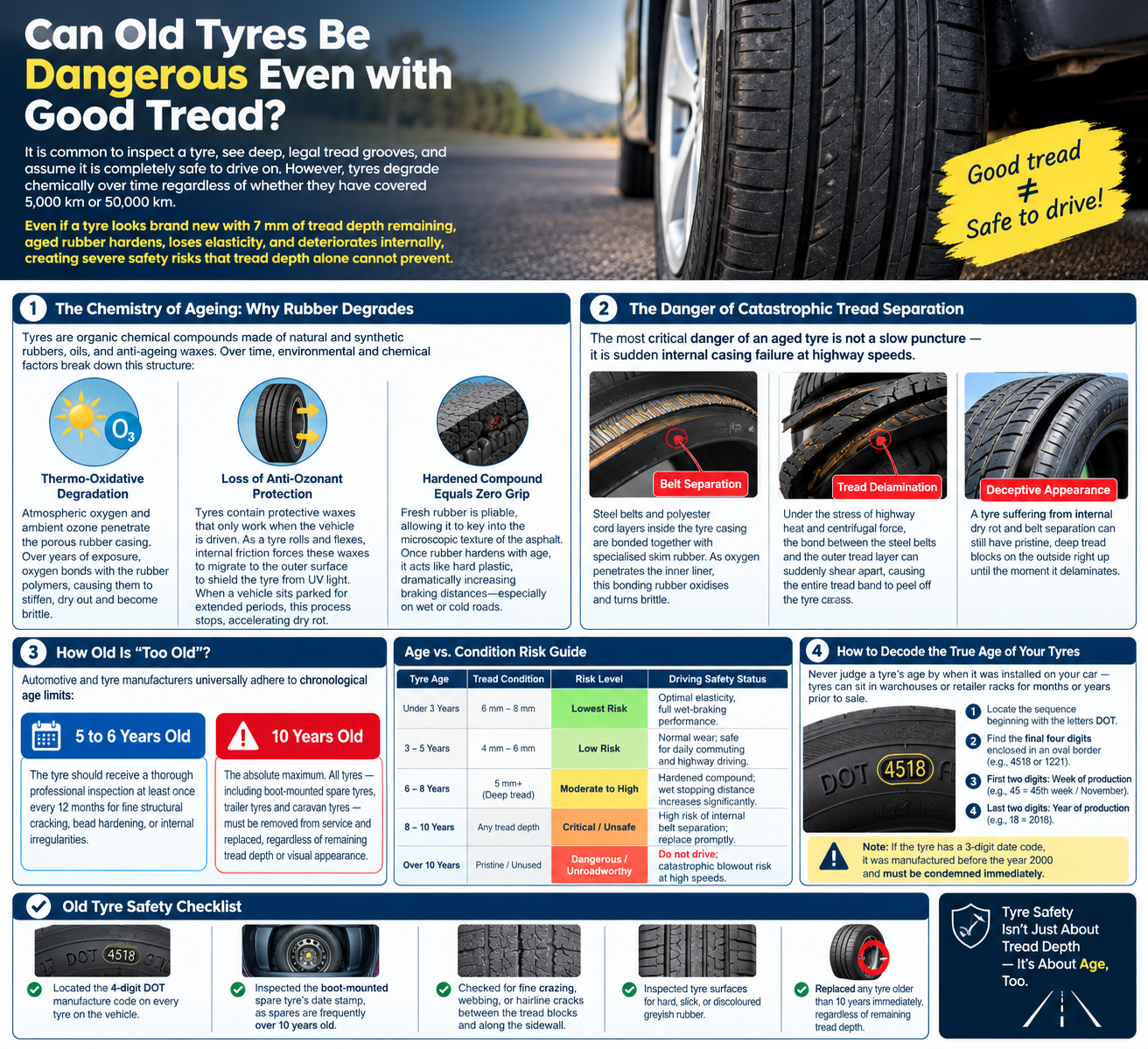
It is common to inspect a tyre, see deep, legal tread grooves, and assume it is completely safe to drive on. However, tyres degrade chemically over time regardless of whether they have covered 5,000 kilometres or 50,000 kilometres.
Even if a tyre looks brand new with 7 mm of tread depth remaining, aged rubber hardens, loses elasticity, and deteriorates internally, creating severe safety risks that tread depth alone cannot prevent.
1. The Chemistry of Ageing: Why Rubber Degrades
Tyres are organic chemical compounds made of natural and synthetic rubbers, oils, and anti-ageing waxes. Over time, environmental and chemical factors break down this structure:
- Thermo-Oxidative Degradation: Atmospheric oxygen and ambient ozone penetrate the porous rubber casing. Over years of exposure, oxygen bonds with rubber polymers, causing them to stiffen, dry out, and become brittle.
- Loss of Anti-Ozonant Protection: Protective waxes only work when a vehicle is driven. As a tyre rolls, internal friction forces waxes to migrate to the outer surface; when parked long-term, this self-lubricating process stops, accelerating dry rot.
- Hardened Compound Equals Zero Grip: Fresh rubber is pliable, but aged rubber acts like hard plastic, dramatically increasing braking distances—especially on wet or cold roads.
2. The Danger of Catastrophic Tread Separation
The most critical danger of an aged tyre is sudden internal casing failure at highway speeds:
- Belt Separation: Steel belts and polyester cords inside the casing are bonded with skim rubber. As oxygen penetrates, this bonding rubber oxidises, turns brittle, and loses adhesion.
- Tread Delamination: Under highway heat and centrifugal force, the bond between steel belts and the outer tread can shear apart, causing the entire tread band to peel off.
- Deceptive Appearance: A tyre suffering from internal dry rot and belt separation can still have pristine, deep tread blocks right up until the moment it delaminates.
3. How Old Is "Too Old"?
- 5 to 6 Years Old: Tyres should receive a thorough professional inspection at least once every 12 months for fine structural cracking, bead hardening, or internal irregularities.
- 10 Years Old (Absolute Maximum): All tyres—including spares, trailer, and caravan tyres—must be removed from service and replaced, regardless of remaining tread depth or visual appearance.
Age vs. Condition Risk Guide
| Tyre Age | Tread Condition | Risk Level | Driving Safety Status |
|---|---|---|---|
| Under 3 Years | 6 mm – 8 mm | Lowest Risk | Optimal elasticity, full wet-braking performance. |
| 3 – 5 Years | 4 mm – 6 mm | Low Risk | Normal wear; safe for daily commuting and highway driving. |
| 6 – 8 Years | 5 mm+ (Deep tread) | Moderate to High | Hardened compound; wet stopping distance increases significantly. |
| 8 – 10 Years | Any tread depth | Critical / Unsafe | High risk of internal belt separation; replace promptly. |
| Over 10 Years | Pristine / Unused | Dangerous / Unroadworthy | Do not drive; catastrophic blowout risk at high speeds. |
4. How to Decode the True Age of Your Tyres
Never judge a tyre’s age by installation date. Inspect the DOT code stamped into the outer sidewall (the final 4 digits enclosed in an oval border, e.g., 4518):
- First two digits: Week of production (e.g., 45 = 45th week).
- Last two digits: Year of production (e.g., 18 = 2018). Note: 3-digit codes mean pre-2000 and must be condemned immediately.
Old Tyre Safety Checklist
- Located the 4-digit DOT manufacture code on every tyre on the vehicle.
- Inspected the boot-mounted spare tyre's date stamp, as spares are frequently over 10 years old.
- Checked for fine crazing, webbing, or hairline cracks between the tread blocks and along the sidewall.
- Inspected tyre surfaces for hard, slick, or discoloured greyish rubber.
- Replaced any tyre older than 10 years immediately, regardless of remaining tread depth.