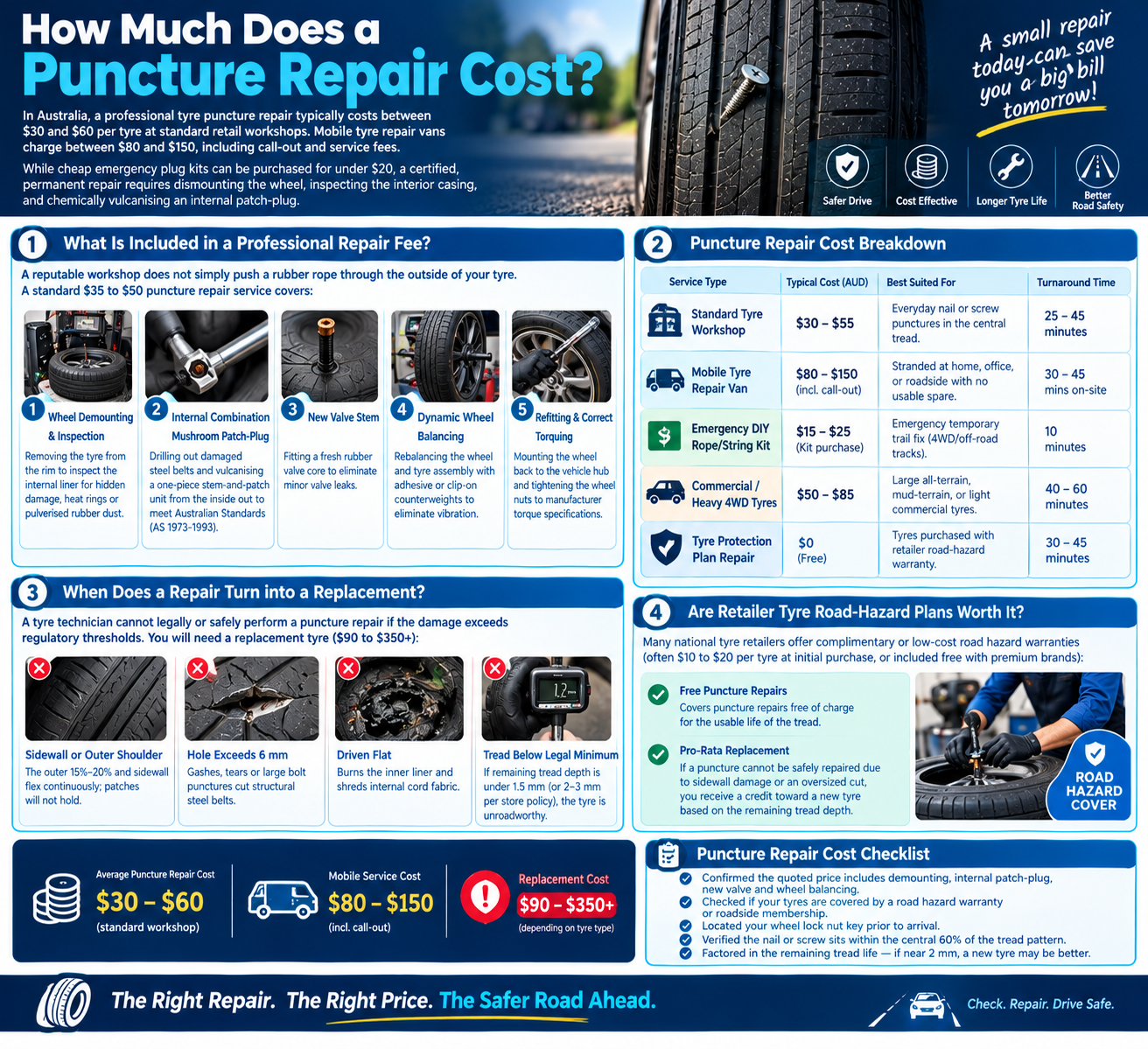
In Australia, a professional tyre puncture repair typically costs between $30 and $60 per tyre at standard retail workshops (such as Bob Jane T-Marts, Tyrepower, JAX Tyres, or mycar). If you use a mobile tyre fitting van that comes to your home, roadside, or workplace, expect to pay between $80 and $150, which accounts for call-out and service fees.
While cheap emergency plug kits can be purchased at auto parts stores for under $20, a certified, permanent repair requires dismounting the wheel, inspecting the interior casing, and chemically vulcanising an internal patch-plug.
1. What Is Included in a Professional Repair Fee?
A reputable workshop does not simply push a rubber rope through the outside of your tyre. A standard $35 to $50 puncture repair service covers:
- Wheel Demounting & Inspection: Removing the tyre completely from the rim to inspect the internal butyl liner for hidden cord damage, heat rings, or pulverised rubber dust.
- Internal Combination Mushroom Patch-Plug: Drilling out damaged steel belts and vulcanising a one-piece stem-and-patch unit from the inside out to meet Australian Standards (AS 1973-1993).
- New Valve Stem: Fitting a fresh rubber valve core to eliminate minor valve leaks.
- Dynamic Wheel Balancing: Rebalancing the wheel and tyre assembly with adhesive or clip-on counterweights to eliminate steering vibration at highway speeds.
- Refitting & Correct Torquing: Mounting the wheel back to the vehicle hub and tightening the wheel nuts to manufacturer torque specifications.
2. Puncture Repair Cost Breakdown
| Service Type | Typical Cost (AUD) | Best Suited For | Turnaround Time |
|---|---|---|---|
| Standard Tyre Workshop | $30 – $55 | Everyday nail or screw punctures in the central tread | 25 – 45 minutes |
| Mobile Tyre Repair Van | $80 – $150 (incl. call-out) | Stranded at home, office, or roadside with no usable spare | 30 – 45 mins on-site |
| Emergency DIY Rope/String Kit | $15 – $25 (Kit purchase) | Emergency temporary trail fix (4WD/off-road tracks) | 10 minutes |
| Commercial / Heavy 4WD Tyres | $50 – $85 | Large all-terrain, mud-terrain, or light commercial tyres | 40 – 60 minutes |
| Tyre Protection Plan Repair | $0 (Free) | Tyres purchased with retailer road-hazard warranty | 30 – 45 minutes |
3. When Does a Repair Turn into a Replacement?
A tyre technician cannot legally or safely perform a puncture repair if the damage exceeds regulatory thresholds. In these situations, you will need to purchase a replacement tyre ($90 to $350+):
- The Hole Is in the Sidewall or Outer Shoulder: The outer 15%–20% of the tyre and the sidewall undergo continuous dynamic flexing; patches will not hold.
- The Hole Exceeds 6 mm in Diameter: Gashes, tears, or large bolt punctures cut structural steel belts that rubber plugs cannot structurally bridge.
- The Tyre Was Driven Flat: Running even a few hundred metres on a deflated tyre burns the inner liner and shreds internal cord fabric.
- Tread Is Below Legal Minimum: If remaining tread depth is under 1.5 mm (or below 2 mm to 3 mm per store safety policies), the tyre is unroadworthy and must be retired.
4. Are Retailer Tyre Road-Hazard Plans Worth It?
Many national tyre retailers offer complimentary or low-cost road hazard warranties (often costing $10 to $20 per tyre at initial purchase, or included free with premium brands) that cover free puncture repairs and pro-rata credit replacements if damage is unrepairable.
Puncture Repair Cost Checklist
- Confirmed the quoted price includes tyre demounting, internal patch-plug, new valve, and wheel balancing.
- Checked if your tyres are covered by an existing retailer road hazard warranty or roadside membership benefits.
- Located your wheel lock nut key prior to arrival to avoid shop delay charges.
- Verified that the nail or screw sits within the central 60% of the tread pattern before visiting.
- Factored in the remaining tread life—if the tyre is sitting near 2 mm, investing in a new tyre often makes better financial sense.