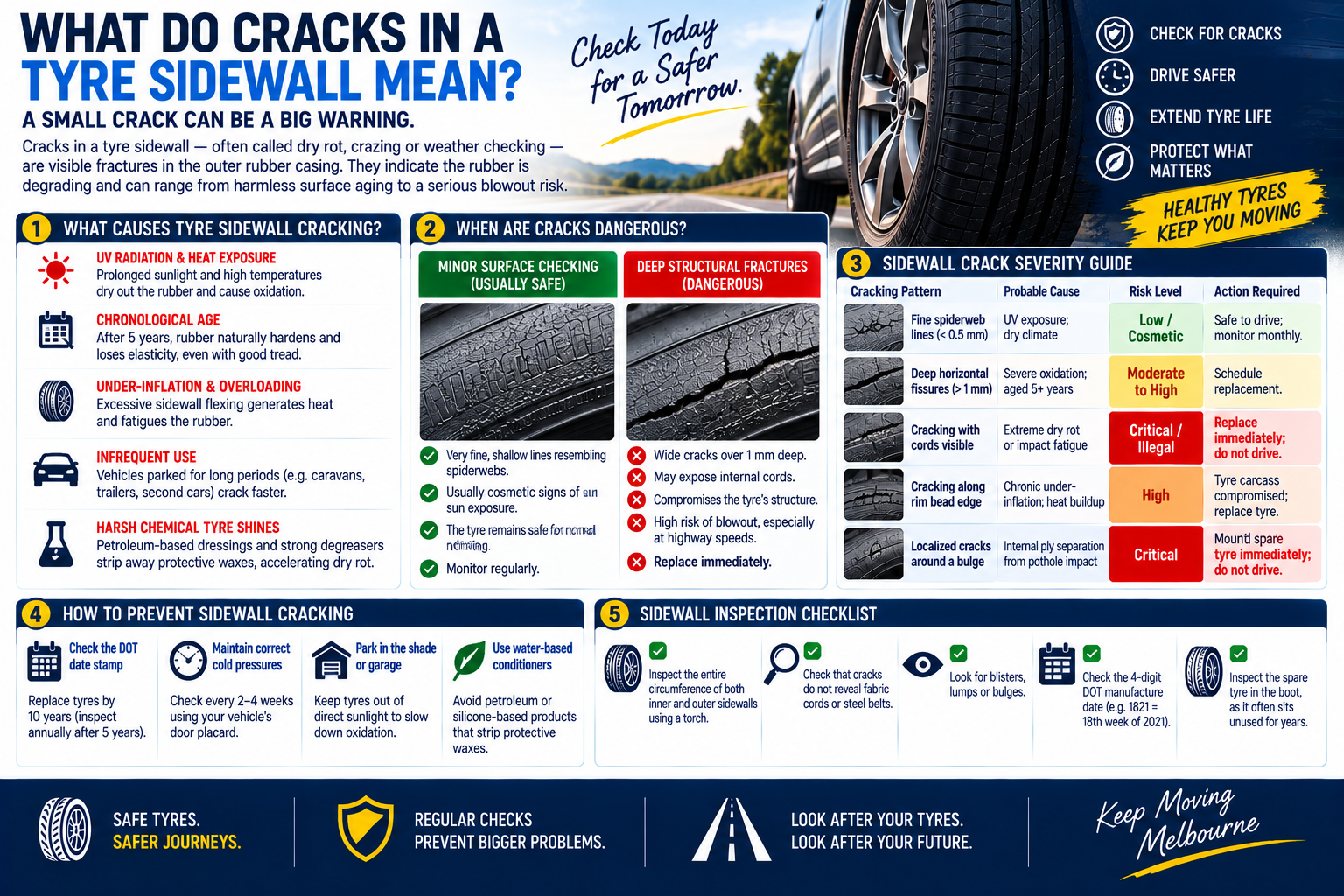
Cracks in a tyre sidewall—often referred to as dry rot, crazing, or weather checking—are visible fractures in the outer rubber casing. Because the sidewall flexes continuously to absorb road impacts and holds your vehicle's tyre pressure, cracking is an early warning sign of chemical degradation or structural fatigue.
Depending on their depth and severity, sidewall cracks range from cosmetic surface drying to a critical blowout risk that makes your car unroadworthy.
1. What Causes Tyre Sidewall Cracking?
Tyre rubber contains specialised anti-ageing chemicals and waxes designed to keep the compound flexible. When these protective agents break down, cracks begin to form:
- UV Radiation & Heat Exposure: Prolonged exposure to sunlight and high temperatures dries out the synthetic polymers and natural oils in the rubber compound, leading to oxidation.
- Chronological Age: As tyres pass the 5-year mark, the rubber naturally hardens and loses elasticity, regardless of how much tread remains.
- Under-Inflation & Overloading: Driving on low tyre pressure forces the sidewall to bend and flex excessively with every revolution, generating high internal heat that fatigues the rubber.
- Infrequent Use: Anti-ozonant compounds inside the rubber only migrate to the surface when the tyre is driven and flexed. Vehicles parked for months crack faster than daily drivers.
- Harsh Chemical Tyre Shines: Petroleum-based tyre dressings and strong degreasers strip away the tyre's natural protective waxes, accelerating surface dry rot.
2. When Are Cracks Dangerous?
Not all cracks mean instant failure, but understanding the difference between surface aging and structural failure is critical:
- Minor Surface Checking (Hairline Cracks): Very fine, shallow lines resembling spiderwebs across the sidewall. These are usually cosmetic signs of sun exposure and remain safe for normal driving with regular monitoring.
- Deep Structural Fractures (Over 1 mm Deep): Wide cracks where you can see down between the rubber blocks or expose the internal cord casing. These compromise the structural carcass of the tyre and represent an imminent blowout danger.
- Cracks Accompanied by Bulges: If a crack occurs near a bubble, knot, or blister, the inner ply layers have failed, allowing pressurized air to separate the sidewall layers. This requires an immediate tyre change.
Severity Guide: Sidewall Cracking
| Cracking Pattern | Probable Cause | Risk Level | Action Required |
|---|---|---|---|
| Fine Spiderweb Lines (< 0.5 mm) | UV sunlight exposure; dry climate | Low / Cosmetic | Safe to drive; clean rubber and monitor monthly. |
| Deep Horizontal Fissures (> 1 mm) | Severe rubber oxidation; aged 5+ years | Moderate to High | Schedule replacement; avoid long high-speed trips. |
| Cracking with Cords Visible | Extreme dry rot or impact fatigue | Critical / Illegal | Replace immediately; do not drive. |
| Cracking Along Rim Bead Edge | Chronic under-inflation; heat buildup | High | Tyre carcass compromised; replace tyre. |
| Localized Cracks Around a Bulge | Internal ply belt separation from pothole impact | Critical / Blowout Imminent | Mount spare tyre immediately; do not drive. |
How to Prevent Sidewall Cracking
- Check the DOT Date Stamp: Inspect the 4-digit date code on the sidewall. Any tyre past 5 years of age must be inspected annually; replace by 10 years regardless of visual tread depth.
- Maintain Correct Cold Pressures: Check PSI every 2 to 4 weeks according to your vehicle's door placard to eliminate excessive sidewall flexing.
- Park in the Shade or Garage: Keeping tyres out of direct sunlight significantly slows down rubber oxidation.
- Use Water-Based Tyre Conditioners: Avoid petroleum-distillate or silicone sprays that dissolve built-in anti-ozonants.
Sidewall Inspection Checklist
- Inspected the entire circumference of both inner and outer sidewalls using a torch.
- Verified that cracks do not penetrate deep enough to reveal fabric cords or steel belts.
- Confirmed the absence of any accompanying blisters, lumps, or bulges.
- Checked the 4-digit DOT manufacture date to ensure the tyre is not overaged.
- Inspected the spare tyre in the boot for dry rot, as spares often sit unused for years.