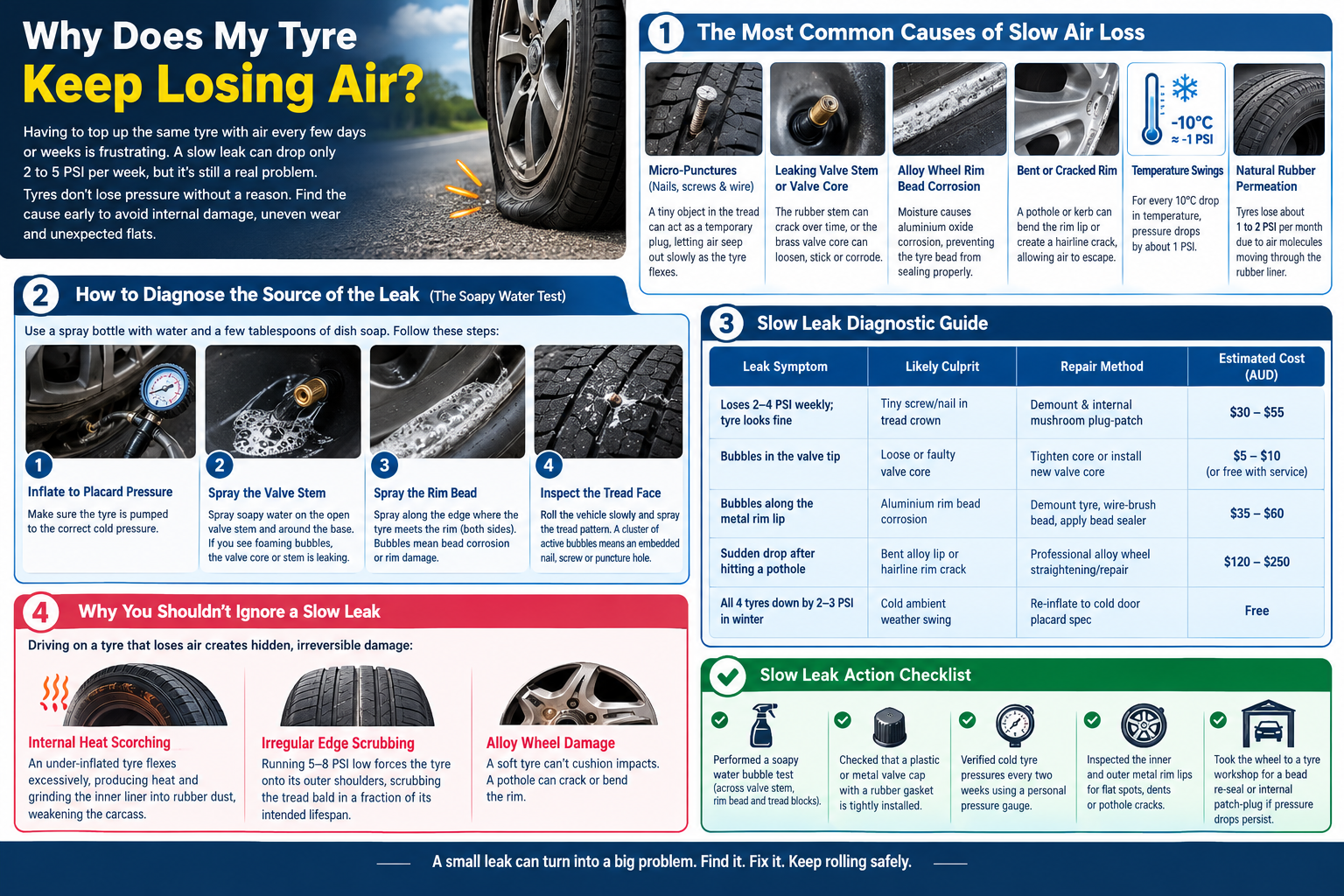
Having to top up the same tyre with air every few days or weeks is one of the most common—and frustrating—motoring headaches. Unlike a sudden blowout, a persistent "slow leak" can be deceptively subtle, often dropping only 2 to 5 PSI per week without showing any obvious external damage.
However, tyres do not lose pressure without a mechanical reason. Identifying the exact source of a slow leak early prevents internal tyre casing destruction, uneven tread wear, and unexpected roadside flats.
1. The Most Common Causes of Slow Air Loss
- Micro-Punctures (Embedded Nails, Screws & Wire): A tiny nail or construction screw lodged deep in the tread crown acts as a temporary plug, allowing air to seep out slowly around the threads as the tyre flexes and rolls.
- Leaking Valve Stem or Valve Core: The rubber valve stem flexes under centrifugal force at highway speeds, cracking over time, while the internal brass valve core can stick, loosen, or corrode from road grime.
- Alloy Wheel Rim Bead Corrosion: Moisture trapped between the tyre bead and the aluminium rim creates white powdery aluminium oxide corrosion, preventing the rubber bead from seating airtight against the wheel lip.
- Bent or Hairline-Cracked Wheel Rim: Hitting a severe pothole or kerb can bend the inner metal rim lip or create a microscopic hairline fracture in a cast alloy wheel.
- Ambient Temperature Swings & Permeation: For every 10°C drop in temperature, tyre pressure naturally drops by roughly 1 PSI, while normal rubber permeation causes air molecules to migrate through microscopic pores at 1 to 2 PSI per month.
2. How to Diagnose the Source of the Leak (The Soapy Water Test)
You can locate a stubborn slow leak at home using a spray bottle filled with water and a few tablespoons of liquid dish soap:
- Inflate to Placard Pressure: Ensure the tyre is pumped to its correct cold operating pressure.
- Spray the Valve Stem: Spray soapy water directly into the open valve stem (without dust cap) and around its base. Growing, foaming bubbles indicate a leaking valve core or stem.
- Spray the Rim Bead (Both Sides): Spray along the seam where the rubber tyre meets the metal rim. Bubbles forming along this edge indicate bead corrosion or rim damage.
- Inspect the Tread Face: Roll the vehicle slowly and spray the entire tread pattern to reveal active bubbling around an embedded nail or tiny puncture hole.
Slow Leak Diagnostic Guide
| Leak Symptom | Likely Culprit | Repair Method | Estimated Cost (AUD) |
|---|---|---|---|
| Loses 2–4 PSI weekly; tyre looks fine | Tiny screw/nail in tread crown | Demount & internal mushroom plug-patch | $30 – $55 |
| Bubbles in the valve tip | Loose or faulty valve core | Tighten core or install new valve core | $5 – $10 (or free with service) |
| Bubbles along the metal rim lip | Aluminium rim bead corrosion | Demount tyre, wire-brush bead, apply bead sealer | $35 – $60 |
| Sudden drop after hitting a pothole | Bent alloy lip or hairline rim crack | Professional alloy wheel straightening/repair | $120 – $250 |
| All 4 tyres down by 2–3 PSI in winter | Cold ambient weather swing | Re-inflate to cold door placard spec | Free |
3. Why You Shouldn't Ignore a Slow Leak
Continuously driving on a tyre that loses air creates hidden, irreversible damage, including internal heat scorching from excessive flexing, irregular shoulder edge scrubbing, and severe alloy wheel rim damage when hitting potholes.
Slow Leak Action Checklist
- Performed a soapy water bubble test across the valve stem, rim bead, and tread blocks.
- Checked that a plastic or metal valve cap with a rubber internal gasket is tightly installed.
- Verified cold tyre pressures every two weeks using a personal pressure gauge.
- Inspected the inner and outer metal rim lips for flat spots, dents, or pothole cracks.
- Taken the wheel to a tyre workshop for a bead re-seal or internal patch-plug if pressure drops persist.